Hyperion for Cement
Cement plant stockpile inventory management with survey-grade accuracy
Hyperion automates stockpile inventory management for cement plants. Permanently mounted LiDAR scanners measure quarry limestone, coal and alternative fuels, and additives in minutes, with no downtime and no one on the pile.
The challenge
The cost of inaccurate stockpile inventory in cement
Effective stockpile inventory management underpins profitability at every cement plant. Traditional methods are slow and intermittent, and their errors show up across the operation.
Operational disruptions
Guesswork leads to unexpected shortages that halt production and leave trucks, drivers and operators idle. Every hour of stoppage is lost revenue and a hit to your reliability with customers.
Capital tied up in piles
To avoid shortages, many plants overstock, tying up working capital and raising carrying costs. Knowing your real inventory lets you buy when the market is cheap and use the storage capacity you actually have.
Strategic blind spots
Without a current picture of on-hand material, procurement, production scheduling and financial planning all rest on uncertain numbers. You can't manage what you can't measure.
What Hyperion measures
Built for the materials that feed the kiln
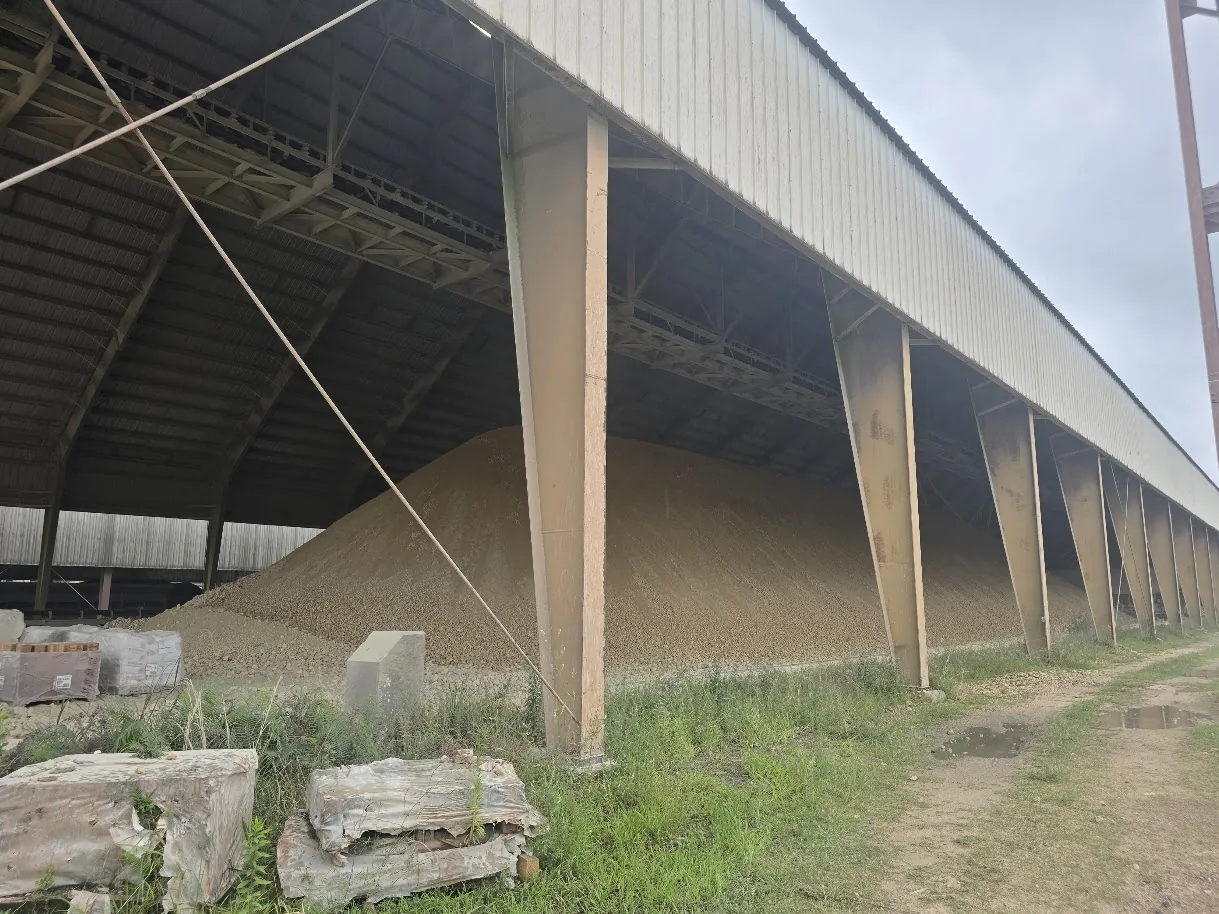
Hyperion is at its best on the stockpiles upstream of the kiln, where raw material and fuel inventory drive your production schedule and purchasing.
Limestone and raw materials
Track crushed limestone from the quarry, along with shale, clay, sand and iron ore, in pre-blending and raw material storage. Know how many days of kiln feed you have on hand and plan quarry output to match.
Coal and alternative fuels
Measure coal, petcoke and alternative fuels such as tire-derived fuel, biomass and refuse-derived fuel. Accurate fuel tonnage supports kiln firing plans, well-timed purchases and clean month-end reconciliation.
Additives
Keep gypsum, fly ash, slag, pozzolans and bauxite in view so blending and grinding never wait on a material that ran short, and so you order additives before the supply gets tight.
A note on dusty storage
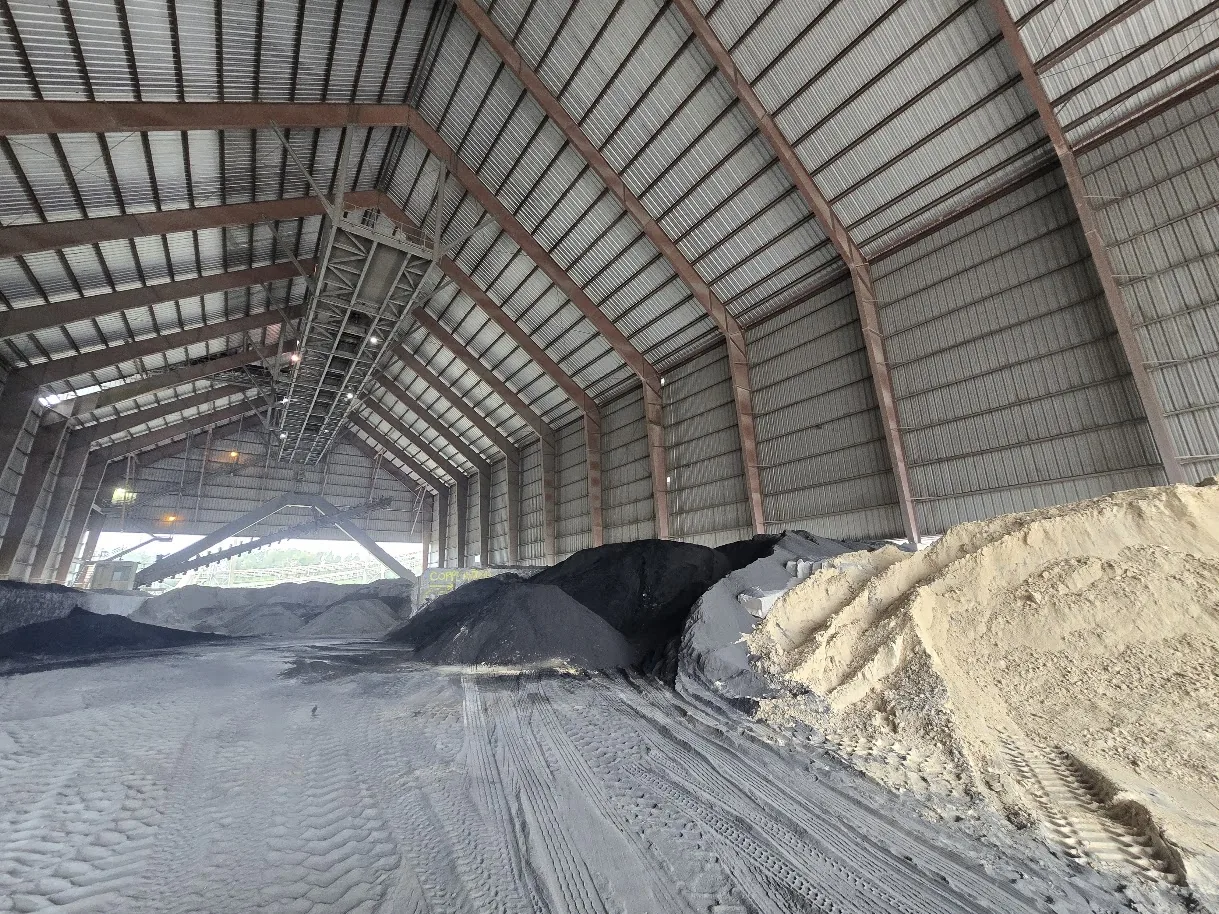
Clinker and finished cement storage is often very dusty. The EOS2 enclosure is dust protected, but heavy airborne dust scatters the laser and can limit what the sensor sees, so EOS2 may not be the best fit for those areas. During a site review we will look at your storage buildings and tell you plainly where Hyperion will perform well.
Case study
Proven at a Newberry, FL cement plant
Four EOS2 scanners on overhead trusses measured an indoor coal stockpile in under 20 minutes during normal operations. Hyperion's mass estimate came within 0.55% of a certified third-party terrestrial survey.
Read the cement plant case studyHow it works
From physical pile to precise digital data in three steps
Automated data capture
Eye-safe Class 1 EOS2 LiDAR scanners are placed above your stockpiles and triggered on a schedule or on demand from a browser. Each scan builds a dense point cloud of the pile surface, capturing every peak and valley without the safety risk or downtime of a manual survey.
Cloud processing
Point clouds upload automatically to the Hyperion cloud platform. The software composites data from multiple scanners, filters out noise and equipment, and uses surface reconstruction (including Poisson surface reconstruction) to build an accurate 3D mesh, then computes volume.
Results on demand
Within minutes, the 3D model and volume appear on your Hyperion dashboard. Apply your material density for tonnage and reconcile inventory daily, or even per shift, from any device.
Visualization
Visualizing your stockpile data
Hyperion turns LiDAR data into clear views of every pile in the plant.
Accurate 3D models
An automatically generated 3D mesh shows the exact shape and volume of each stockpile, a digital twin of your physical inventory. Use it to identify irregularities, plan reclamation and verify deliveries.
Detailed height maps
Color-coded height maps show how material is distributed within a pile. Spot high and low points, monitor pile geometry, optimize storage space and keep front-end loader work safe and efficient.
Benefits
The Hyperion advantage for cement plants
More than measurements: data your plant, procurement and finance teams can act on.
Financial control and less waste
An accurate, current view of your stockpiles supports just-in-time ordering, lower carrying costs and fewer end-of-month write-offs, with an auditable picture of your assets.
Safer sites
Permanently mounted scanners remove the need for surveyors on or near unstable piles, reducing the risk of slips, falls and other accidents.
Smoother workflows
Automated scans free your team from manual measurement, and low-stock visibility helps keep material flowing to production without stoppages.
Data-driven decisions
Historical consumption trends support forecasting and supply planning, and everyone from operations to finance works from the same numbers.
Cement plant stockpile FAQ
At a Newberry, Florida cement plant, Hyperion's mass estimate for an indoor coal stockpile showed a 0.55% variance relative to a certified third-party terrestrial survey.
No. In the Newberry project, four permanently installed EOS2 scanners completed the scan and processing in under 20 minutes during normal operations, with no downtime.
Yes. EOS2 scanners can be mounted on overhead trusses above indoor piles, and Hyperion merges data from multiple scanners into one surface for the whole building.
Hyperion works best on the stockpiles that feed the kiln: limestone and other raw materials from the quarry, coal, petcoke and alternative fuels, and additives such as gypsum, fly ash and slag. Clinker and finished cement storage is often very dusty, and heavy airborne dust can limit what the EOS2 laser sees, so we assess those areas case by case during a site review.
Hyperion applies the bulk density you set for each material to the measured volume, giving you a weight estimate for every pile on your dashboard.
Related Solutions
Contact
Bring survey-grade accuracy to your cement plant
Tell us about your limestone, fuel and additive storage and we will arrange a personalized Hyperion demonstration.
- +1 352-283-8003
- info@altamusinc.com
- 4936 SW 91st Ter M102
Gainesville, FL 32608