By Kyle Ulmer · · 4 min read
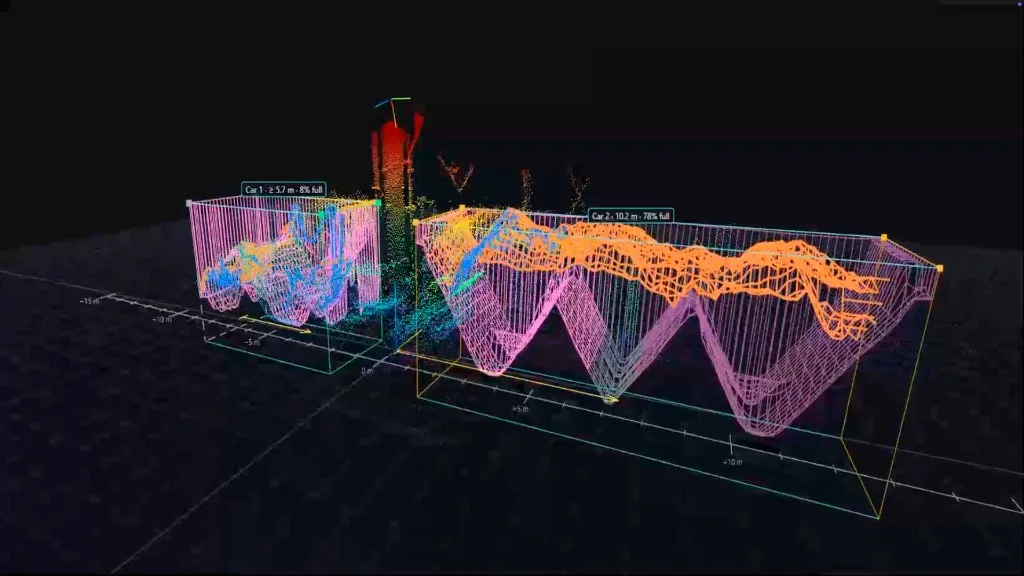
We're excited to share an upcoming project with Canopy Vision, a Tampa-based AI vision company focused on rail and industrial operations. Together we're building a low-cost system that measures how much material goes into a railcar during loading, and how much comes out when it's unloaded. Canopy Vision brings the cameras, AI vision and rail-yard platform. We bring the LiDAR sensors and the point cloud processing that turns scans into volumes.
Canopy Vision announced the partnership on their blog in Leveraging A.I. Vision and LiDAR for Railcar Loading and Unloading Operations. Here's the project from our side.
The problem: loadouts without scales
A rail loadout with a scale underneath it is simple to run. Each car has its own empty (tare) weight and a maximum Gross Weight on Rail, so the operator loads until the car reaches its load limit and stops.
But scales are expensive capital projects. Plenty of facilities have several loadout points and only one scale, often near the exit, used for the legal-for-trade weight on the way out. At the other loadouts, cars are filled by eye. Some leave underloaded, which wastes rail capacity you're paying for. Others get overloaded and have to be pulled back and corrected.
Receiving has the mirror-image problem. If you don't have a scale where cars are unloaded, you're relying on the numbers reported by the railroad or the shipper. Spills, short loads and simple data errors flow straight into your inventory and yield numbers, and they tend to surface later as write-downs. We've written before about what those month-end surprises really cost.
What we're building together
The system pairs cameras with LiDAR at the loadout or unloading point:
- Canopy Vision provides the AI vision: cameras that identify and follow the car, and the Canopy Vision platform where measurements and video come together alongside their AEI RFID reading and railcar tracking.
- Altamus provides the LiDAR sensors and the point cloud processing: capturing the shape of the material in the car and calculating its volume.
The key feature is that it works while the car is moving. At many loadouts the car is indexed forward during loading, so a single fixed scan after loading is too late to help the operator. Combining vision with LiDAR lets the system keep a running estimate of what's in the car as it fills, so operators can act on it in real time instead of finding out after the fact.
Our role: turning scans into reliable volumes
Measuring material in a moving railcar draws directly on the work we do every day measuring stockpiles and bins with Hyperion:
- Rugged, low-power sensors. Loadouts are dusty, wet and hard on equipment. Our sensors are designed for outdoor industrial sites and built in-house in Gainesville, Florida.
- Sensor placement. LiDAR only measures what it can see. Car walls, chutes and the load itself can hide material from a poorly placed sensor, so placement is part of the engineering, not an afterthought. More on that in LiDAR line-of-sight limits.
- Registration. When more than one sensor views a car, their scans have to line up precisely before volumes mean anything. We covered how we do that in point cloud registration.
- Volume calculation. We separate the material surface from the car and compute volume, scan after scan.
Volume, density and the scale you already have
LiDAR measures volume, not weight. Converting to tons takes a material density. For materials with consistent density, that conversion is straightforward. For materials whose density swings widely, volume alone may not be the right tool, and we'll say so.
There's also a useful twist for sites that already have a scale. Pair car-by-car volume with the scale's weight and you get a measured density for every car, without manual sampling or autosamplers. That density can then improve the volume-to-weight estimates at the loadouts that don't have a scale.
A look at Canopy Vision's other work
This project builds on a strong track record. Canopy Vision already helps rail and industrial sites see what's happening in their operations, and the volumetric data we produce will sit alongside these systems on their platform.
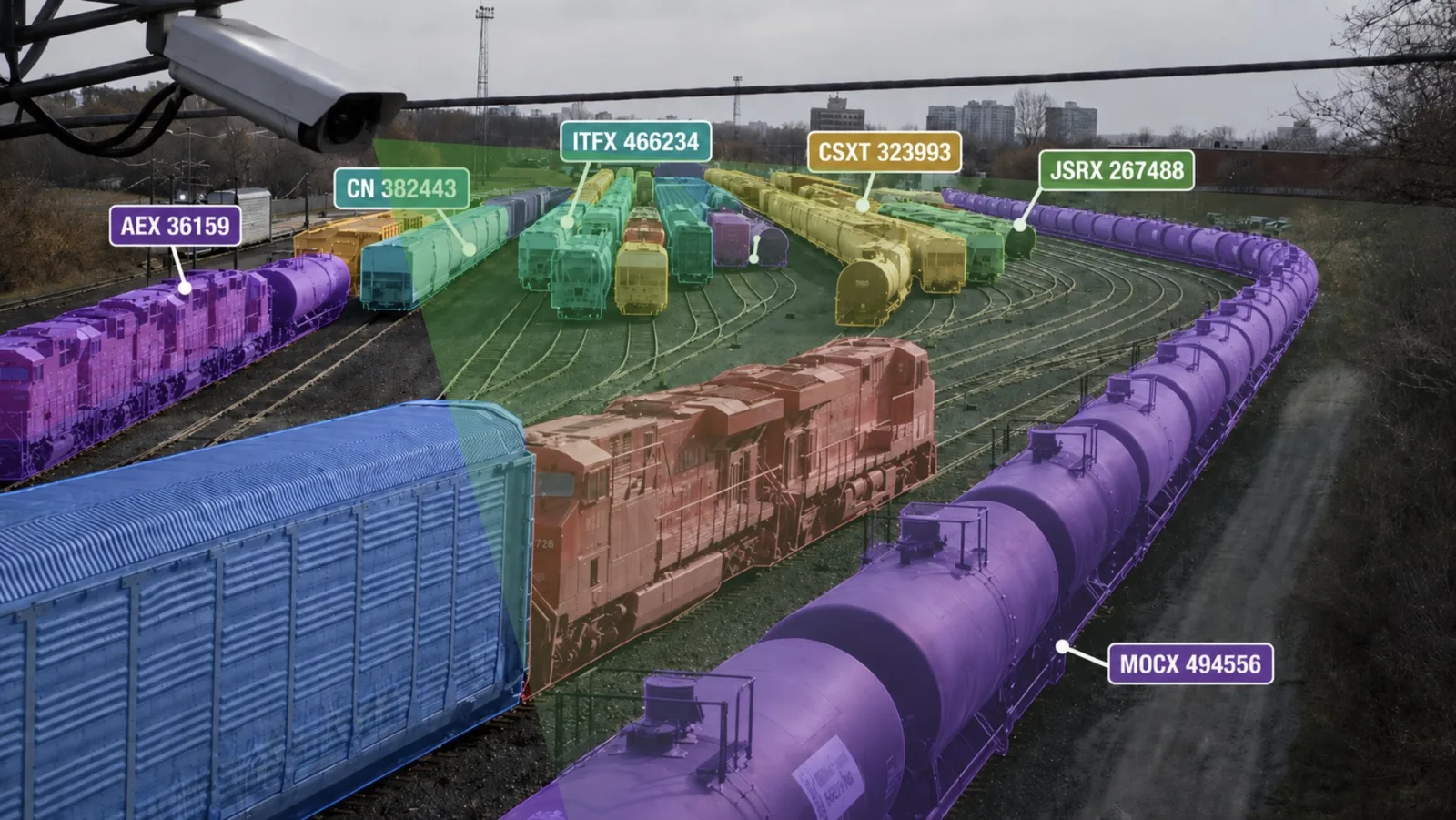
Rail yard tracking
Cameras at key switches and yard locations, combined with RFID, follow railcars as they move and report their positions on a central dashboard with 24/7 video. Because cameras cover more ground, the approach needs fewer install points than an RFID-only system. Learn about rail yard tracking.
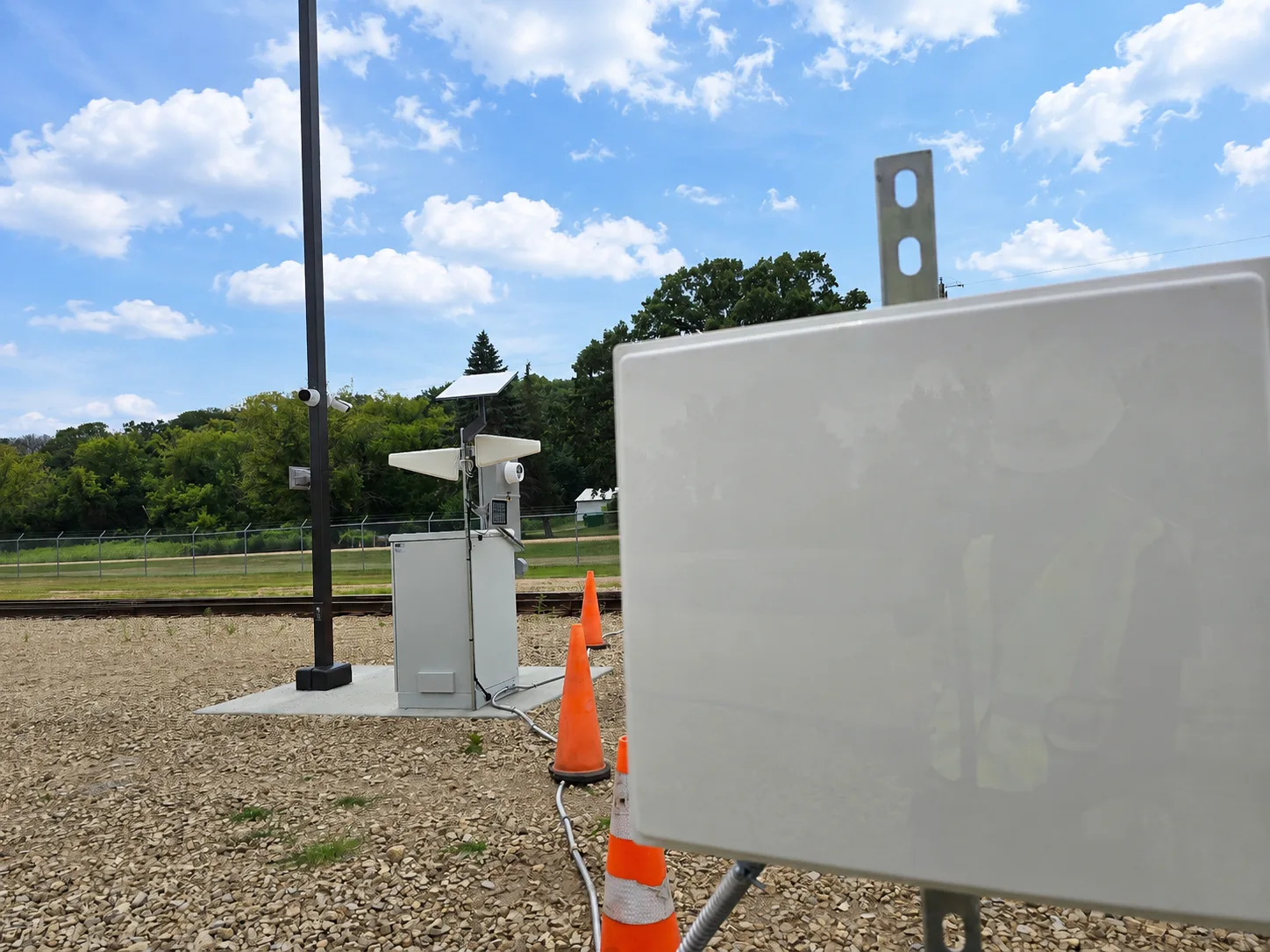
AEI RFID reader with a camera
Canopy Vision's AEI reader pairs RFID antennas with a camera, so each pass-by logs the car number and direction plus a video record for loading verification or damage claims. It installs on one side of the track and can run on solar and cellular at remote sites. Learn about the AEI RFID reader.
Pass-by car inspection and track inspection
Visual and thermal cameras at fixed inspection points check railcars as they roll past, flagging hot bearings, brakes and wheels, open doors, shifted loads and leaks without stopping the train. Locomotive-mounted cameras do the same for the track itself, turning everyday moves into GPS-tagged inspections. Learn about car inspection and track inspection.
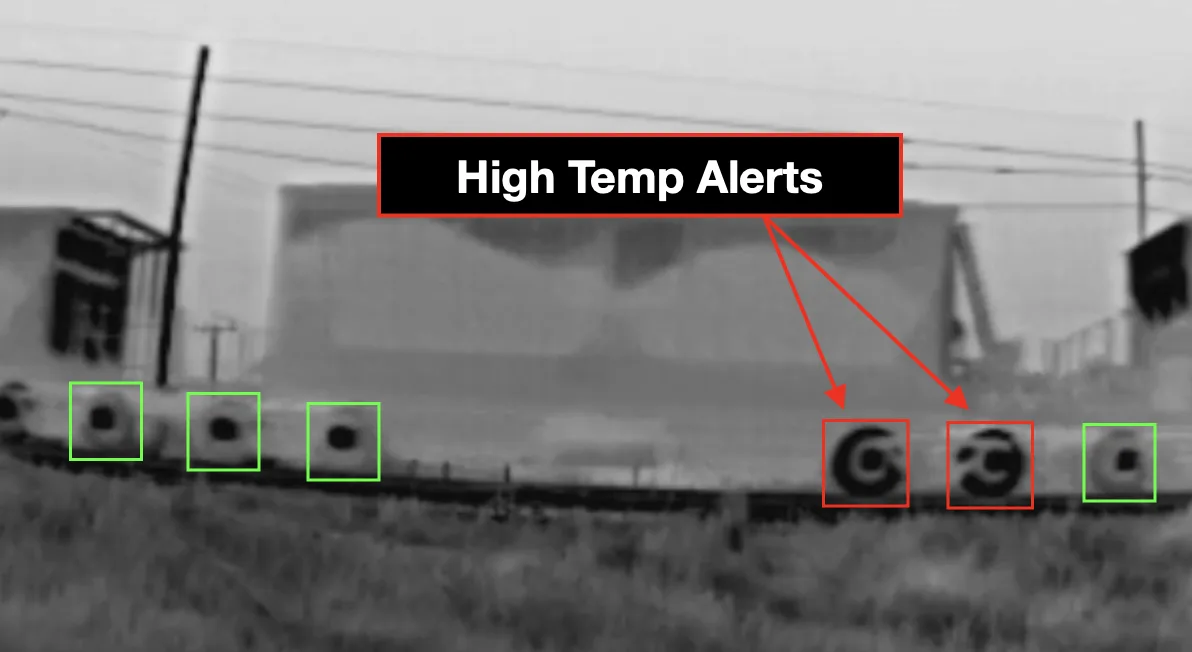
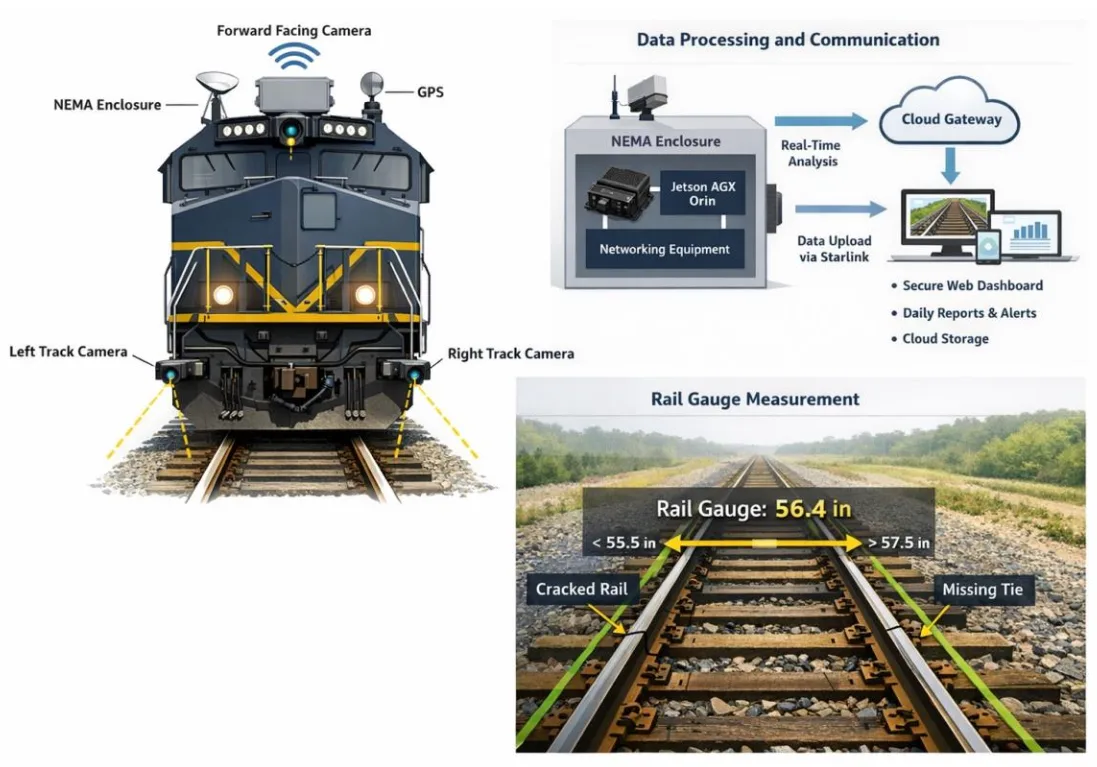
Thermal car inspection (left) and the locomotive-mounted track inspection system (right). Images: Canopy Vision.
Industrial process monitoring
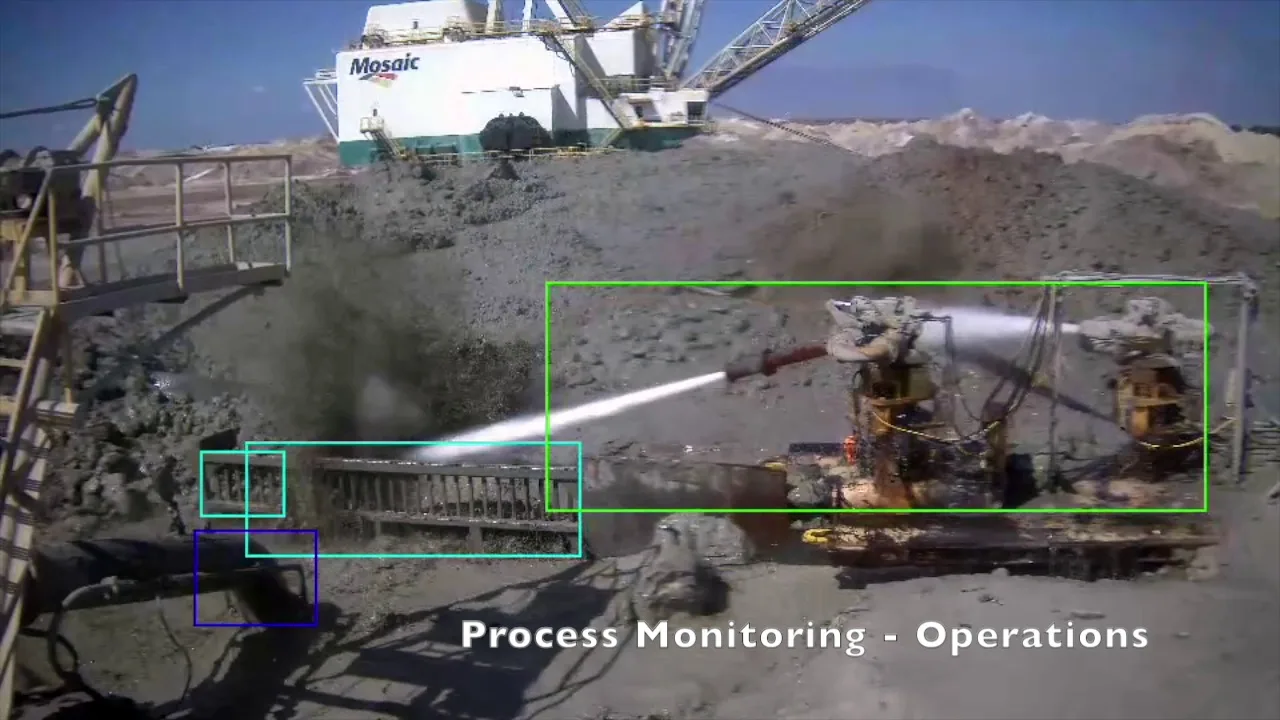
Beyond rail, Canopy Vision has used cameras to watch processes that are hard to measure with traditional sensors. At one mine, cameras observe a dirty sump and feed dozens of visual data points to the PLC for automated control. Other deployments include truck scale monitoring that uncovered the causes of recurring inventory write-downs, and dragline bucket counting for production tracking. See more in their use case library.
Does your facility load or unload railcars without a scale at every point? We'd like to hear about your operation. Get in touch with us, or reach Canopy Vision at sales@canopy-vision.ai.
What's next
We're looking forward to getting sensors on the rail and will share results as the project moves forward. Thanks to the Canopy Vision team for the partnership.
Comments
No comments yet. Questions and field experience are welcome.
Leave a comment